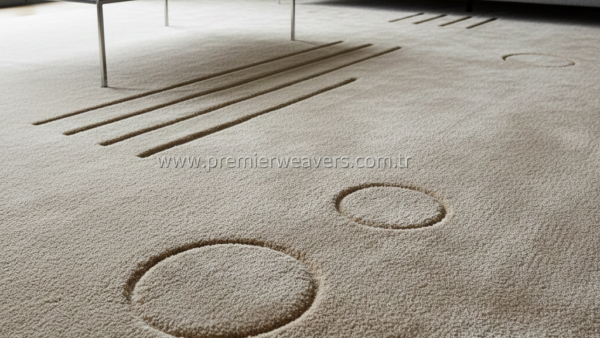
When a carpet is subjected to a heavy point load, such as under the legs of furniture, it is unreasonable to expect the carpet not to indent. Usually, the longer the load is in place, the longer will be the time for the pile to recover. In the case of very heavy loads in place for a considerable time, the recovery time can be very considerable.
It must be remembered that it is not only the pile of the carpet that becomes indented. The underlay will also indent and the backing of the carpet may also distort into the indentation in the underlay. Some underlays will recover well and some less well depending upon their composition, thickness, density etc. The use of cups below furniture legs can spread the load and the net result is a large area of less deeply indented carpet.
The ability of carpet to recover from a heavy static load can be measured in the laboratory, using the test method described in BS 4939 and many manufacturers will have data on this aspect of carpet performance. In this test the carpet is loaded for 24 hours the degree of recovery is measured after 1 hour and 24 hours. Since there are so many different underlays however, it is very rare for the recovery from a heavy static load to be evaluated on carpet and underlay.
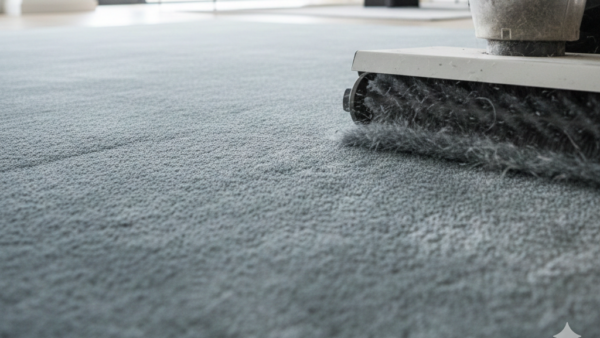
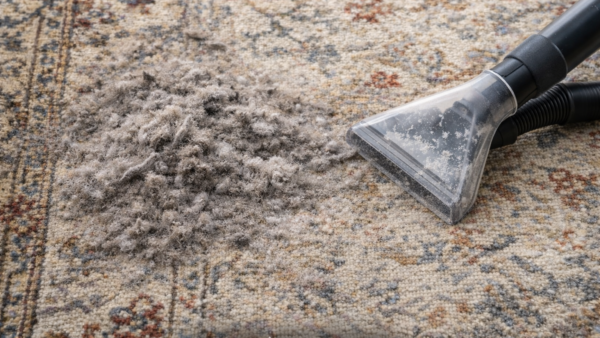
Often normal maintenance (Vacuum cleaning with a rotating brush machine) will speed up recovery but in the case of serious indentations the use of an iron and damp cloth or a steam iron together with a blunt darning needle to carefully tease up the pile can be beneficial. Care must be take not to over wet the carpet, of course.