

0

Search

With over years of experience, Premier Weavers is now in 22+ World Countries !

Yarn Engineering Approaches for High-Performance Carpets

In modern living spaces, expectations from carpets extend beyond aesthetics. Criteria such as durability, stain resistance, acoustic performance, and comfort are achieved through yarn engineering. Yarn structure—including twist level, filament count, and fiber cross-section—directly affects the final performance of a carpet.

For instance, yarns made from trilobal cross-section filaments reflect light more effectively, giving carpets a brighter appearance. High-twist yarns reduce deformation in high-traffic areas. Additionally, using different polymers in warp and weft yarns allows carpets to be both flexible and strong.

Recently developed stain-resistant yarns delay liquid absorption through special surface treatments, which is a major advantage for commercial spaces. Yarn engineering continues to be one of the most critical factors determining quality in carpet technologies.
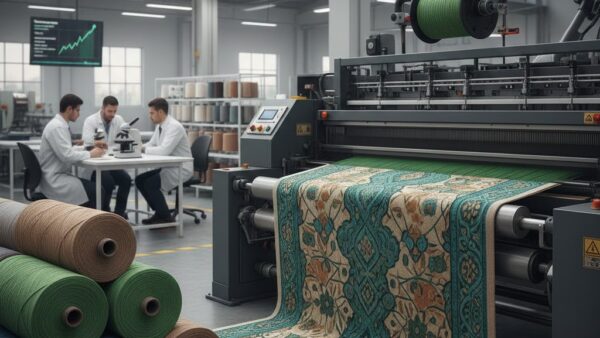

The Role of Sustainable Yarn Technologies in Carpet Manufacturing

Today, environmental concerns have made sustainability a necessity in carpet and yarn production. In this context, recycled and bio-based yarns have gained an important role in carpet technologies. Polyester yarns produced from recycled PET (rPET) bottles offer environmentally friendly solutions while maintaining high performance.

Sustainable yarns should be evaluated not only by their raw materials but also by their energy and water consumption during production. Thanks to next-generation spinning technologies, it is now possible to produce stronger and more durable yarns using less energy. When applied in carpets, these yarns provide advantages such as long service life, color fastness, and resistance to abrasion.

Moreover, blending natural fibers (such as wool, bamboo, and linen) with synthetic fibers is important for achieving both aesthetic quality and environmental balance. Sustainable yarn technologies help reduce the carbon footprint of the carpet industry while positively influencing consumer awareness.

Smart Yarns and Digital Transformation in the Textile Industry

The textile industry is shifting away from traditional production models toward smart systems under the influence of Industry 4.0. At the center of this transformation are smart yarn technologies. Smart yarns are developed with functional capabilities such as electrical conductivity, temperature sensing, moisture detection, and antibacterial properties.

These yarns are typically produced using nanotechnology, microencapsulation, and conductive polymers. For example, yarns containing silver nanoparticles provide both antibacterial properties and electrical conductivity. When used in carpet production, such yarns enable the development of floor coverings that can sense ambient temperature, reduce static electricity, or improve hygiene levels.

In the future, smart yarns are expected to be integrated with sensor systems, transforming carpets into “data-generating surfaces.” This presents significant potential, particularly for smart homes, hospitals, and hospitality environments.

Back to Top
Product has been added to your cart
Compare (0)